
LED Screen Hire Brisbane
Twisted Pair Productions provides professional LED screen and video wall hire for events across Brisbane and South East Queensland.
From corporate conferences and exhibitions to concerts, festivals and outdoor events, we provide indoor and outdoor LED screen solutions tailored to your venue, audience and content.
Our team can manage the complete solution, including screen configuration, structures and rigging, video control, content playback, cameras and experienced technical crew, or simply provide the LED screen components you need as part of a larger production.
LED Screen Options for Every Event
Our modular LED screen systems can be configured to suit everything from corporate conferences and exhibitions through to concerts, festivals and large outdoor events.
Indoor LED Screens
For conferences, exhibitions, awards nights, product launches and corporate events, our high-resolution 2.9mm pixel pitch LED provides excellent image quality for audiences viewing from closer distances.
Outdoor LED Screens
Our outdoor LED inventory includes 2.9mm, 3.9mm and 5.9mm pixel pitch options, allowing us to select the right balance of resolution, screen size and viewing distance for each event.
These systems are designed for outdoor use and can be configured for concerts, festivals, sporting events, public events and large-scale activations. Screens can be ground supported, flown from suitable structures or integrated into a complete stage design.
LED Video Walls & Custom Configurations
Our modular LED systems use a combination of 500mm x 500mm and 500mm x 1000mm panels, allowing screens to be built in a wide range of sizes and formats to suit the event, venue and available space.
A screen can be as small as a few individual panels for a compact display, or scaled up to hundreds of square metres for large stages, concerts, festivals and major outdoor events.
This modular approach also allows us to create different aspect ratios and custom screen layouts rather than being limited to standard 16:9 screen sizes. LED can be configured as traditional presentation screens, large-format video walls, stage backdrops or incorporated into custom production designs alongside staging, lighting and scenic elements.
Our team can help determine the appropriate screen size, pixel pitch and configuration based on audience viewing distance, content, venue and event requirements.
Mobile LED Screen Trailers
Our 5m x 3m mobile LED screen trailers provide a fast and practical large-format screen solution for outdoor events.
The self-contained format makes them particularly well suited to festivals, sporting events, community events, outdoor broadcasts and other applications where a large outdoor screen needs to be installed efficiently without constructing a separate screen support structure.
Complete Vision Production
For events requiring more than content playback, we can provide a complete vision production system around the LED screens.
Our production capabilities include Panasonic professional camera systems for live event coverage, together with Pixelhue and Roland video switching and processing systems. This allows us to manage multiple cameras, presentations, video playback, sponsor content and other sources across the LED screens as part of a complete live production.
Our team can provide the complete system, including LED screens, cameras, video switching, content playback, screen structures and rigging, technical design and experienced vision crew, or provide individual components to integrate with a wider production.
Bluey's World Opening – Brisbane
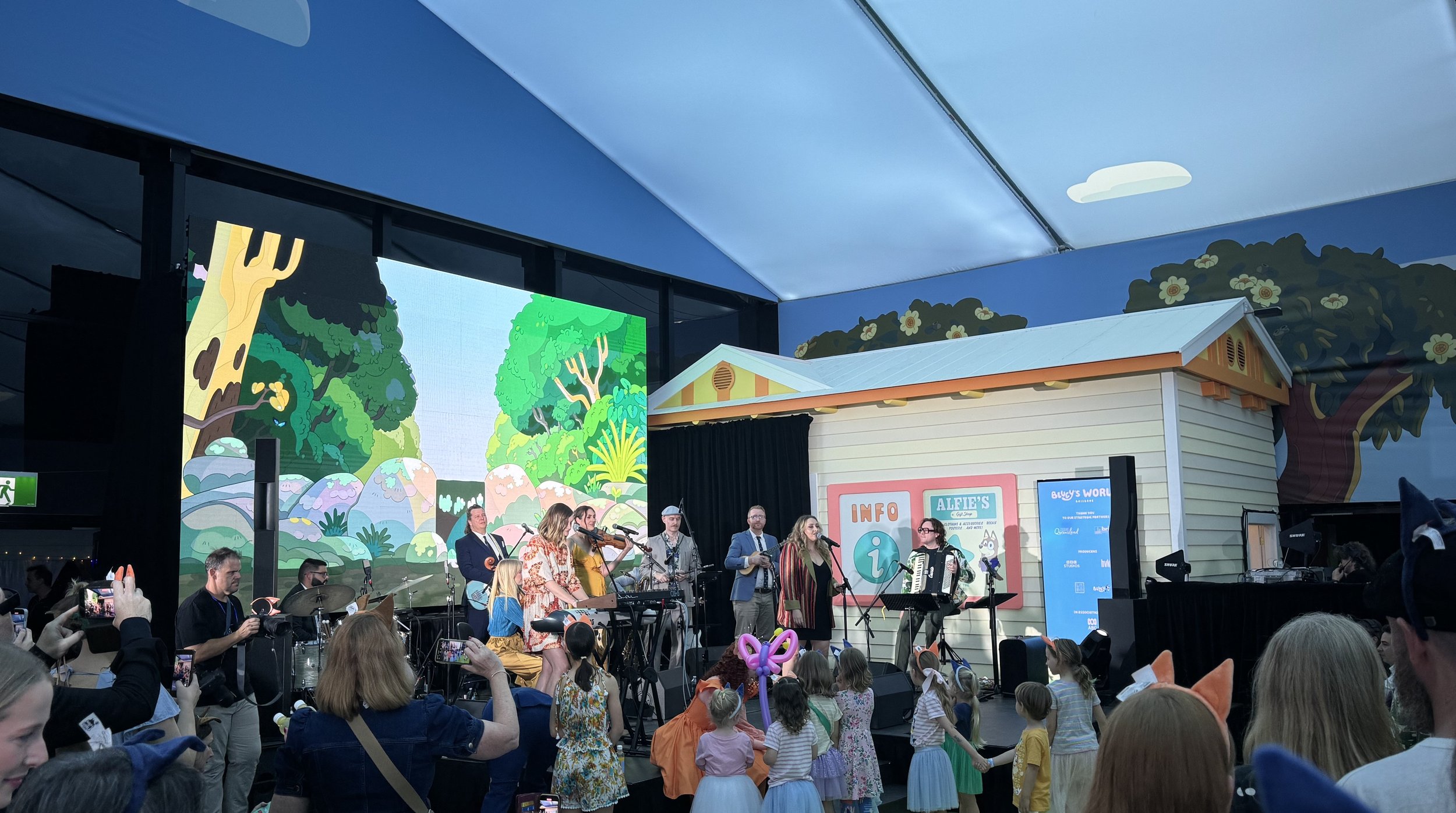
For the opening of Bluey's World in Brisbane, Twisted Pair supplied a 6m x 3.5m 2.9mm pixel pitch LED screen as part of the outdoor event production.
The screen was elevated on a stage riser to provide additional height and improve visibility across the event space, with a rear truss support structure providing a clean, engineered solution for the large-format display.
The high-resolution 2.9mm LED provided a strong visual backdrop for event content, presentations and branding throughout the opening.
Bluey’s World Opening
Red Bull Dance Your Style – Brisbane Powerhouse
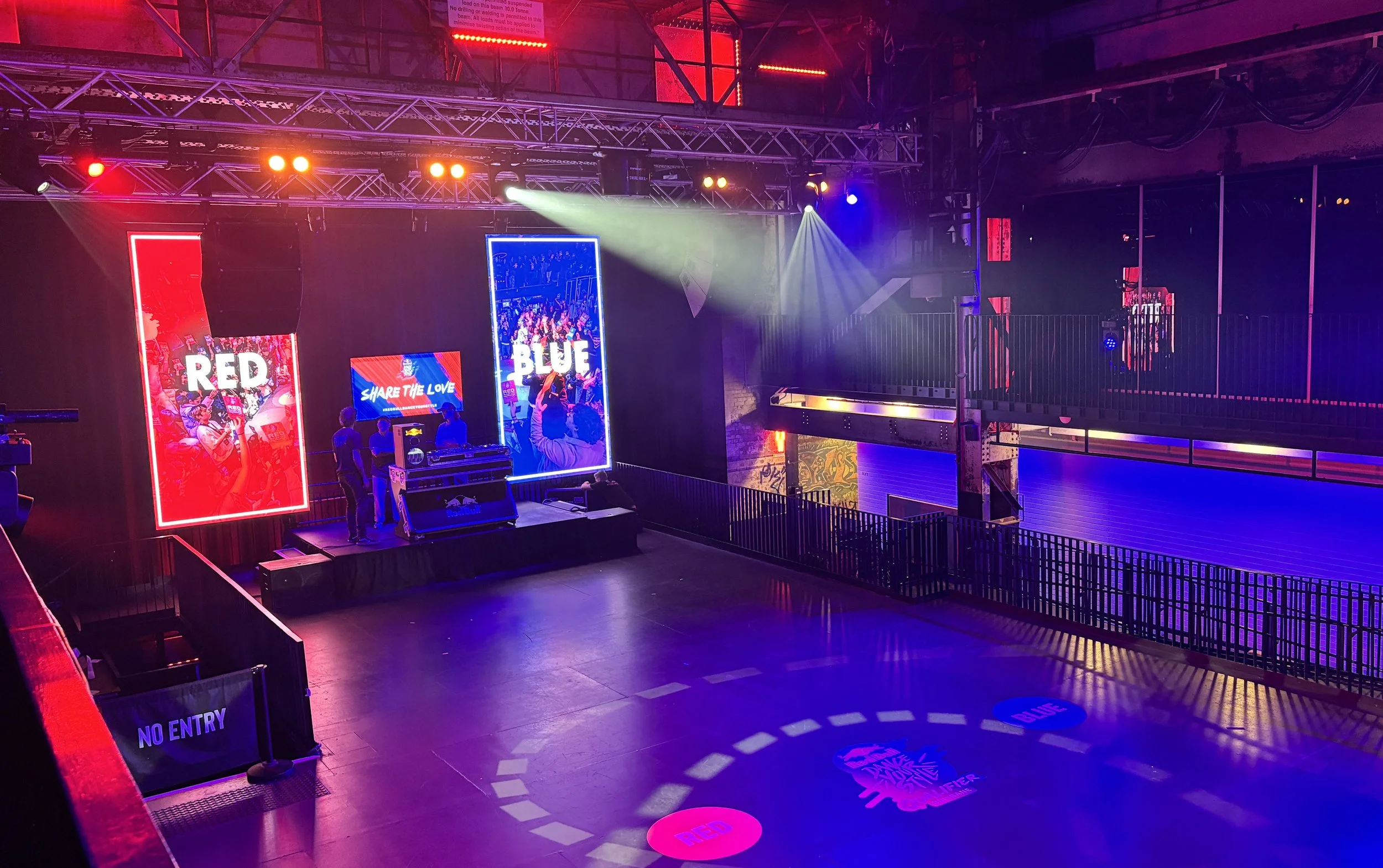
For Red Bull Dance Your Style at Brisbane Powerhouse, Twisted Pair supplied 2 flown portrait LED screens positioned either side of the performance space.
Each screen measured 2m wide x 4m high and used 3.9mm pixel pitch LED panels. The portrait configuration created 2 vertical LED banners, with one dedicated to the Red Team and the other to the Blue Team.
Throughout the competition, the screens displayed team graphics and individual dancer information, integrating the LED displays into both the visual design of the event and the audience experience.
The screens were flown from the venue rigging system, demonstrating how modular LED can be configured beyond traditional widescreen formats to suit the creative and technical requirements of an event.
Redbull Dance Your Style
Diwali Springfield
For Diwali Springfield, Twisted Pair integrated 3.9mm outdoor LED into the stage design as a visual backdrop for the live dance performances.
Rather than using a single conventional screen, the LED was configured as 4 individual columns, each measuring 1m wide x 3m high. Each column was ground supported using truss uprights, creating a segmented LED backdrop across the performance area.
Lighting fixtures were positioned between the LED columns, allowing the lighting and video elements to work together as part of the overall stage design. The result created a dynamic backdrop for the Diwali dancers while demonstrating how modular LED can be incorporated creatively into a wider production design.

Diwali Springfield
How to Choose the Right LED Screen for Your Event
LED screens have become one of the most effective ways to enhance events. Whether it is a corporate conference, music festival, product launch or public event, a professional LED screen allows your audience to clearly see video, presentations and live content from anywhere in the venue.
Modern LED video walls deliver bright, high resolution visuals that remain visible even in daylight or large outdoor environments.
However, choosing the right LED screen is not just about picking the largest screen available. The size, resolution, brightness and placement all determine how well your audience experiences the content.
This guide explains the key factors to consider when hiring an LED screen for an event and how to ensure the technology supports your event goals.
Key Things to Consider When Hiring an LED Screen
STEP 1 – Indoor vs Outdoor Screens
Should I Use an Indoor or Outdoor LED Screen?
The first step is determining where the screen will be used.
Indoor LED screens
These screens are designed for conference rooms, exhibition halls and indoor venues. They typically provide higher resolution for close viewing.
Outdoor LED screens
Outdoor screens are built to handle sunlight and weather conditions. They are brighter and weather resistant so content remains visible even during daylight.
Choosing the right screen type ensures the display remains clear and reliable during the event.
PRO TIP: Always tell your supplier whether the screen will be used indoors or outdoors and the time of day your event will run. Daytime outdoor events often require much brighter screens than indoor or evening events.
STEP 2 – Screen Size and Audience Distance
How Large Should an LED Screen Be for an Event?
The size of the LED screen should match the size of the audience and the viewing distance.
For example:
• small corporate events may use screens around 3–4 metres wide
• medium conference audiences often use 5–7 metre screens
• festivals or outdoor events may require much larger displays
The goal is to ensure everyone in the audience can clearly see the content.
A professional event production team can calculate the appropriate screen size based on audience location and viewing angles.
PRO TIP: If possible, provide your supplier with a floor plan or photos of the venue. This helps them determine the best screen size and placement for your audience.
STEP 3 – Pixel Pitch and Image Quality
What Pixel Pitch Do I Need for an LED Screen?
Pixel pitch is one of the most important technical specifications of an LED screen.
Pixel pitch refers to the distance between the pixels on the screen. A smaller pitch means higher resolution and sharper images for audiences viewing from closer distances.
Typical examples:
• 2.9mm – ideal for corporate events and indoor viewing
• 3.9mm – suitable for larger indoor venues and stages
• 4.8mm and above – commonly used for outdoor events and festivals
Choosing the correct pixel pitch ensures the content looks sharp rather than pixelated.
PRO TIP: If your audience will be close to the screen, such as at conferences or exhibitions, choose a smaller pixel pitch. Larger pitches are better suited to outdoor events where viewers are further away. A good way to think about it is 1mm of pitch per meter of distance from the viewer.
STEP 4 – Brightness and Visibility
How Bright Does an LED Screen Need to Be?
Brightness is measured in nits and determines how visible the screen is under different lighting conditions.
Indoor LED screens typically operate around 1000–3000 nits, while outdoor screens may require significantly higher brightness to remain visible in daylight.
For outdoor events, high brightness is essential so the screen remains clear even in direct sunlight.
PRO TIP: Consider the lighting conditions at your event location. If the screen will be exposed to sunlight or strong ambient lighting, a brighter screen will be required to maintain visibility.
STEP 5 – Screen Placement and Structure
Where Should an LED Screen Be Installed at an Event?
Where the screen is placed affects both visibility and safety.
Common installation options include:
• Ground supported screens
• Stage mounted LED walls
• Truss mounted displays
• Integrated stage backdrops
The screen structure must be engineered to suit the venue and wind conditions, particularly for outdoor events.
Professional installation ensures the screen is safe, secure and positioned for maximum impact.
PRO TIP: Take photos of the event space and send them to your supplier during planning. This helps the technical team determine the safest and most effective installation method.
STEP 6 – Content and Video Management
How Is Content Displayed on an LED Screen?
A large LED screen is only as good as the content displayed on it.
Many events require:
• Presentation playback
• Live camera feeds
• Sponsor graphics
• Motion graphics
• Live streaming content
Working with an experienced production team ensures your content displays correctly and integrates seamlessly with the event schedule.
PRO TIP: Prepare your presentation slides and video content in advance and confirm the correct resolution with your production team. This helps ensure everything displays perfectly on the LED screen.
STEP 7 – Choosing the Right LED Screen Provider
When selecting a supplier, it is important to work with a team experienced in event production, not just equipment hire.
Look for a provider who offers:
• Professional installation
• Experienced technicians
• Content and video support
• Scalable and custom screen sizes
• Integration with staging and lighting
A reliable supplier will help design the right screen solution rather than simply renting equipment.
LED Screen Hire in Brisbane
Twisted Pair Productions provides professional LED screen hire in Brisbane for events across South East Queensland.
Our team works with event organisers, venues and production teams to design LED screen solutions that match the needs of each event.
We provide:
• Indoor and outdoor LED screens
• LED video walls for stages and presentations
• Screen structures and rigging
• Content playback and video control
• Full event production support
Our LED screens are commonly used for:
• Corporate conferences
• Concerts and festivals
• Brand activations
• Public events
• Awards nights
• Venue productions
Planning an Event With an LED Screen?
Choosing the right LED screen can dramatically improve the experience for your audience.
If you are planning an event and considering LED screen hire in Brisbane, our team can help design the right solution for your venue, audience and content.
Contact Twisted Pair Productions to discuss your event and get advice on the best LED screen setup for your production.