
Stage Hire Brisbane
Twisted Pair Productions provides professional stage hire and custom event staging across Brisbane and South East Queensland.
From corporate events and conferences through to concerts, festivals, community events and school productions, we design, document and deliver staging around the specific requirements of the event, venue and wider production.
Flexible Stage Systems for Almost Any Event
Our staging is modular, allowing us to design and build a stage around the requirements of the event rather than working from a limited range of predetermined sizes.
Stage platforms can be configured in different dimensions, shapes and heights, from low-profile stages starting at approximately 200mm through to elevated structures reaching 3-4m where the production or site requires it. This flexibility allows us to create everything from clean corporate presentation stages and speaker platforms through to performance stages, tiered risers and larger festival configurations.
Stage Finishes
The stage surface and finish can also be selected to suit the event and overall production design. Options include natural timber finishes, carpet, clear stage panels, grille surfaces and other treatments depending on the application.
Stage fascias and exposed edges can also be finished to create a clean presentation, particularly for corporate events, conferences, awards nights and brand activations where the appearance of the stage is just as important as its structural function.
Different Stage Support Systems
Different venues and environments require different approaches to supporting the stage.
We have a range of leg and support systems available, including conventional static staging, rolling stage configurations and pneumatic wheel systems. Our pneumatic staging is particularly useful for sports fields and other sensitive surfaces, allowing larger stage structures to be positioned while helping distribute loads and minimise the impact on the playing surface.
The appropriate system is selected based on stage height, loading, ground conditions, access requirements and how the stage needs to function throughout the event.
Designed Around the Production
A stage rarely exists in isolation. We design staging with the wider production in mind, including the position of LED screens, lighting, audio, performers, presenters, scenic elements, access, sightlines and technical requirements.
This can include custom shapes, multiple levels, stairs, handrails, ramps, rolling elements, performance risers and other configurations developed specifically for the event.
Our team can design, document and deliver the complete staging package, giving event organisers a clear understanding of the proposed layout before it arrives on site.
While corporate events are a major focus for Twisted Pair, the same modular approach allows us to provide staging for conferences, awards nights, product launches and brand activations through to festivals, concerts, community events and school productions.
Whether the requirement is a simple presentation stage or a complex custom configuration, the objective is the same: build a stage that works with the venue, production and audience rather than forcing the event to work around a standard stage.
Large Format Trailer Stage Hire
For larger concerts, festivals and outdoor events, Twisted Pair operates a large-format trailer stage designed to accommodate substantial professional production systems.
With a 10.6m x 8.5m performance space, multi-tonne roof loading capacity, dedicated 1T PA points and 4.8m of roof height above the stage deck, it provides significantly greater production capability than a typical mobile stage. The additional height and roof capacity allow lighting and production trusses to be sub-hung from chain motors, giving designers considerably more flexibility with audio, lighting and video systems.
The stage can also be configured with the rear wall removed for 360° and in-the-round events, with PA flying positions available from each corner.
Explore our Large Format Trailer Stage →
Brisbane Sings – Fortitude Music Hall
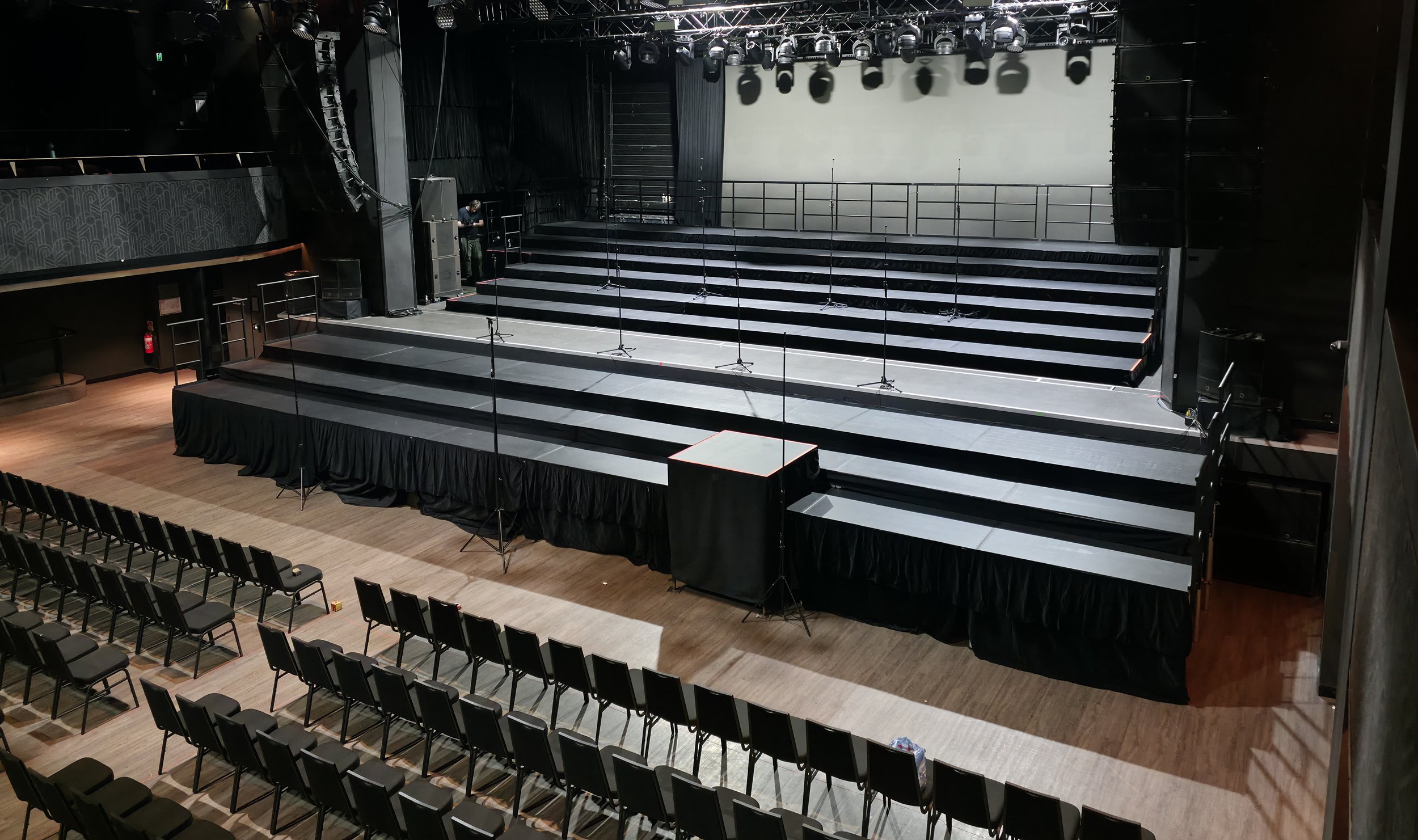
For Brisbane Sings at Fortitude Music Hall, Twisted Pair designed and delivered a large custom tiered stage configuration to accommodate approximately 300 choir performers alongside the band and conductor.
Using more than 60 modular stage panels, the existing venue stage was extended in multiple directions and across 9 tiers. The configuration stepped down from the front of the house stage while also extending upwards across the main stage, creating the space and sightlines required for the full choir.
The design also incorporated a dedicated conductor platform at the downstage edge and a separate band platform to the side of the main choir structure.
The complete staging layout was designed around the existing Fortitude Music Hall stage and the requirements of the performance, demonstrating how modular staging can be used to transform an existing venue rather than simply adding a standard stage platform.
Brisbane Sings
Charity Fundraiser – Clear Stage Over Pool
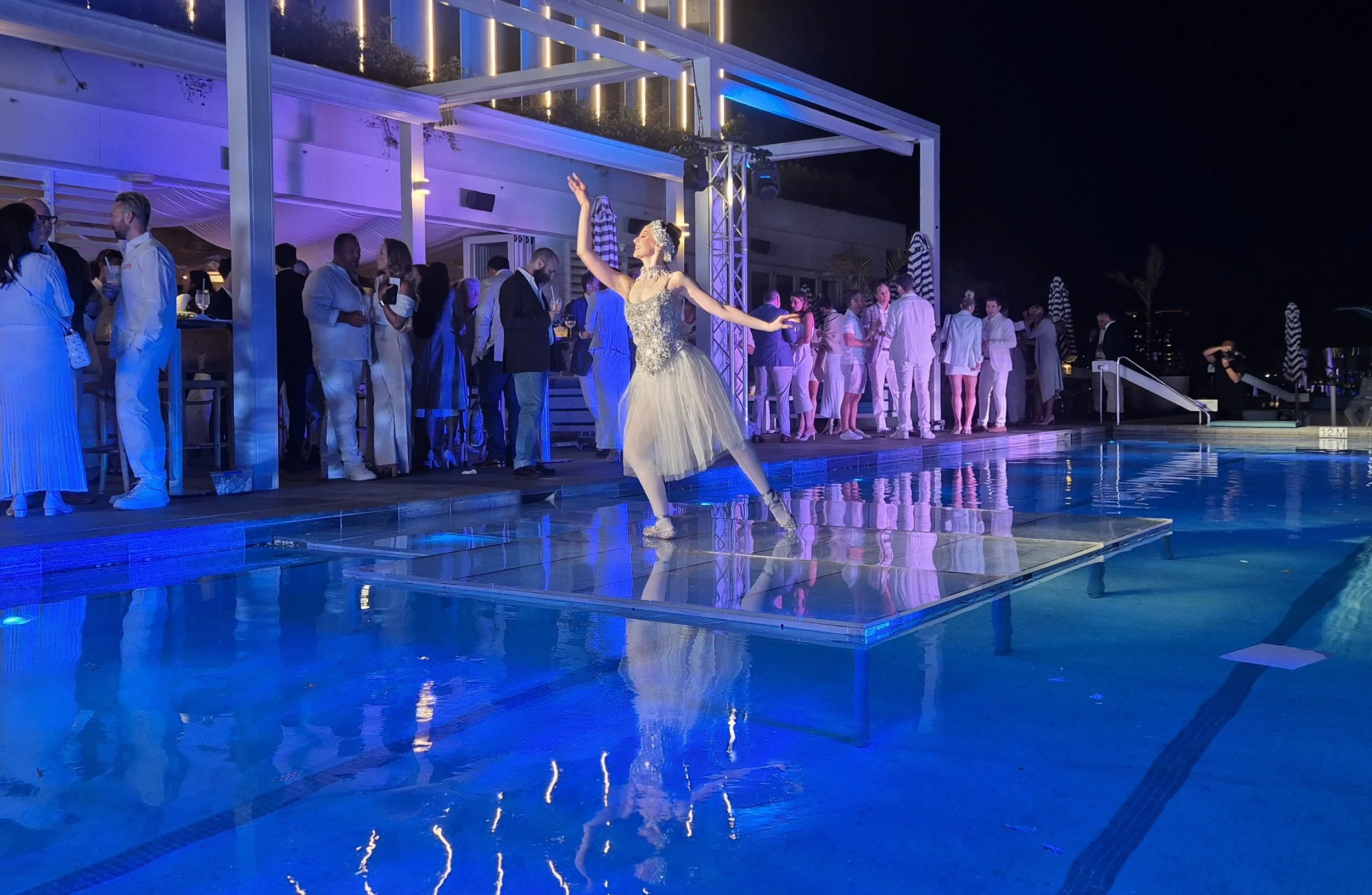
For a charity fundraising event featuring Queensland Ballet, Twisted Pair designed and installed a clear performance stage directly over a swimming pool, creating the appearance of the dancer performing just above the surface of the water.
The stage used clear panels positioned only a few centimetres above the waterline, keeping the pool visible beneath the performer while providing the performance surface required for the ballet.
Battle for Brisbane – Suncorp Stadium
For the Battle for Brisbane NRL match at Suncorp Stadium, Twisted Pair supplied the on-field stage for The Rubens' live halftime performance.
The stage was built using our modular staging and custom pneumatic wheel system, allowing the complete performance stage to be rolled onto the field, positioned for the performance and removed again within the tight halftime changeover.
A full dress rehearsal was completed at the stadium the day before the match to test the stage deployment and timing ahead of the live performance.
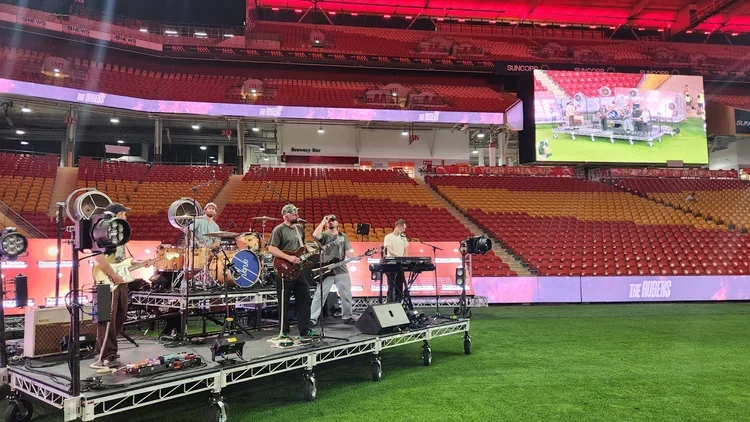
Pneumatic wheel system
How to Choose the Right Stage for Your Event
A well designed stage creates a clear focal point for any event. Whether it is a corporate conference, live performance, festival or public gathering, staging allows speakers and performers to be clearly seen by the audience.
Professional staging also supports the technical elements of an event including lighting, sound systems and LED screens.
Choosing the right stage is about more than simply raising performers above the audience. The size, height, structure and placement of the stage all affect how well the audience can see and engage with the event.
This guide is designed to help event organisers planning stage hire in Brisbane and South East Queensland, and explains the key factors to consider when hiring a stage for an event and how to ensure the stage supports the overall event experience.
Know Your Event Type
Stage Size
Stage Height
Stage Finish
Audience Size and Viewing Angles
Venue and Surface Conditions
Integration With Event Technology
Choosing the Right Stage Provider
Key Things to Consider When Hiring a Stage
Choosing the right stage involves several practical considerations that affect both safety and audience experience.
STEP 1 – Know Your Event Type
What Type of Event Requires Stage Hire?
Stages are used in a wide range of events where presenters or performers need to be visible to the audience.
Common events that require stage hire include:
• Corporate conferences
• Product launches
• Awards nights
• Concerts and music festivals
• Community and public events
• Fashion shows
• Sporting events
In many cases the stage becomes the centrepiece of the event, supporting speakers, performers and visual content.
PRO TIP: Clearly communicating the event type to your staging supplier will help them understand your requirements and goals.
STEP 2 – Stage Size
How Big Should an Event Stage Be?
The size of the stage should match the number of presenters, performers and equipment required.
A conference stage may only need space for a lectern and presentation screen, while a performance stage may need space for musicians, instruments and lighting structures.
PRO TIP: A critical part of choosing the right stage size is knowing the available space. Measure the area where you plan to place the stage and remember to check roof height as well.
STEP 3 – Stage Height
What Height Stage Do I Need for My Event?
Stage height determines how easily the audience can see what is happening.
Small indoor events may only require low stages, while outdoor events or large audiences may require taller staging to ensure visibility.
PRO TIP: Ask your staging partner can help determine the best height based on your event type, stage location and whether custom leg heights are required.
STEP 4 – Stage Finish
What Stage Surface Finish Is Right for My Event?
The finish of the stage surface affects both the appearance and the practical use of the stage. Different events and performances may require different finishes depending on the visual style and how the stage will be used.
Common stage finishes include:
• Plain black – a simple professional finish suitable for most corporate and presentation events
• Carpet topped – commonly used for conferences, awards nights and formal presentations
• Clear – acrylic stage surfaces used for lighting effects or creative stage designs
• Grilled – often used when lighting or special effects need to shine through the stage surface
• Custom finishes – stages can sometimes be customised with printed surfaces, coloured materials or special finishes to match branding or event themes
PRO TIP: Consider how the stage will appear in photos, video and lighting. The stage finish can significantly influence the visual impact of the event.
STEP 5 – Audience Size and Viewing Angles
How Does Audience Size Affect Stage Design?
A stage should be designed so that the audience can clearly see speakers or performers from all viewing positions.
Professional event staging considers sightlines to ensure every audience member has a clear view of the stage.
PRO TIP: Estimate your expected audience numbers in advance and consider any special viewing angles needed to accommodate all audience members.
STEP 6 – Venue and Surface Conditions
Can Stages Be Installed in Any Venue?
Different venues require different staging solutions.
Indoor venues often allow lower profile stages on flat surfaces, while outdoor events may require structures designed to handle uneven ground and weather conditions.
PRO TIP: Take photos of the area where you plan to place the stage and send them to your staging supplier. This helps them assess the space and recommend the best solution.
STEP 7 – Integration With Event Technology
How Does a Stage Work With Lighting, LED Screens and Sound?
Stages often support additional event infrastructure such as:
• LED screens
• Lighting rigs
• Sound systems
• Camera platforms
Designing the stage as part of the overall event production ensures everything works together smoothly.
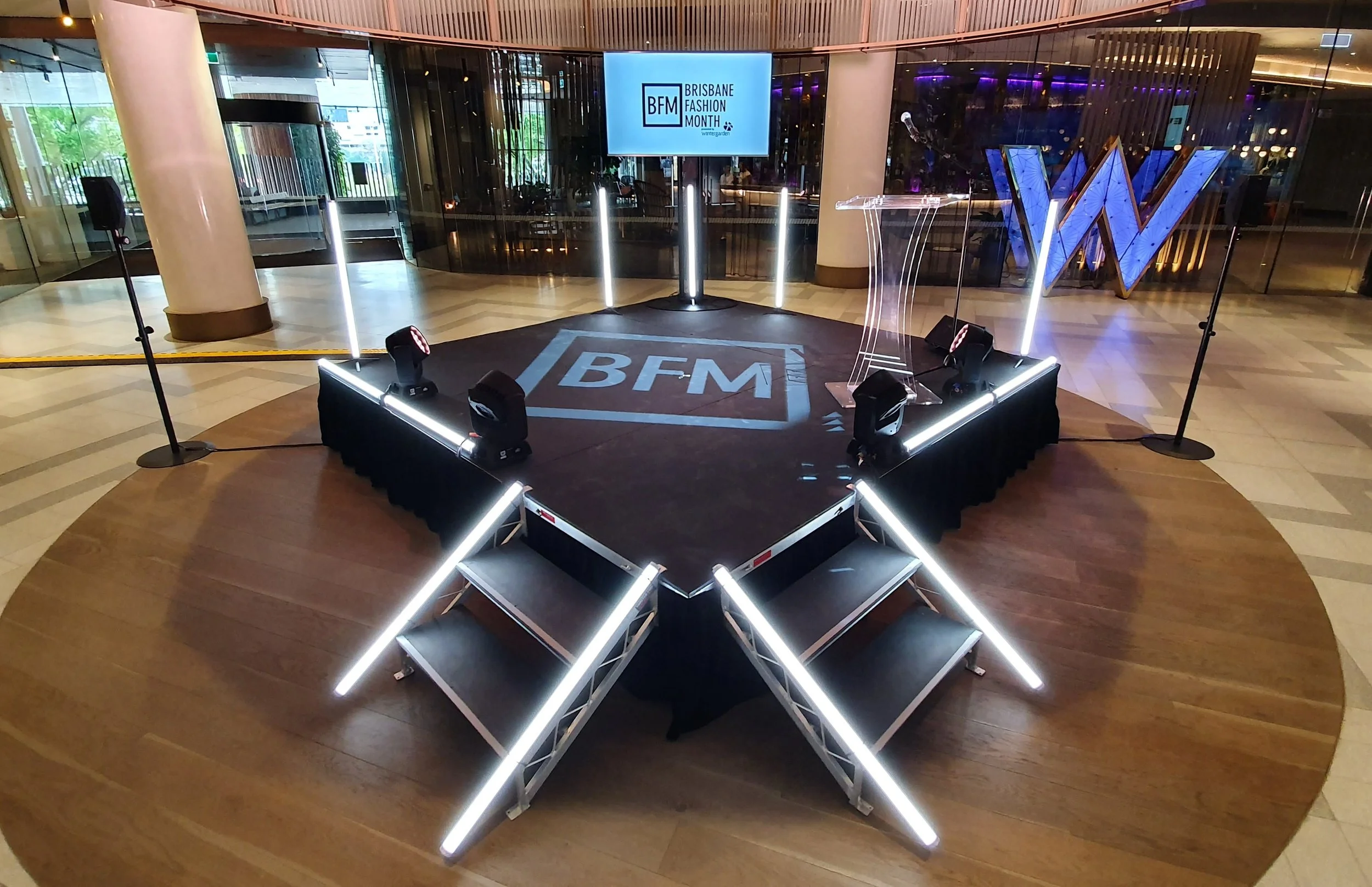
PRO TIP: Professional staging suppliers often work closely with production teams and can provide technical drawings of the stage layout. These drawings help ensure lighting, audio and video equipment will fit correctly.
STEP 8 – Choosing the Right Stage Provider
How Do You Choose the Right Stage Hire Company?
When hiring a stage for an event, it is important to work with a team experienced in event production and staging.
A professional provider should offer:
• Safe and reliable staging systems
• Experienced installation teams
• Flexible stage configurations
• Integration with lighting, sound and video
• Technical advice for event planning
• Technical Drawings
• Insurance documentation
Working with experienced technicians ensures the stage is installed safely and positioned correctly for the event.
PRO TIP: Have your event details ready when requesting a quote. This includes event type, stage size, stage height, audience numbers, venue information, measurements and any technical requirements.
Stage Hire in Brisbane
Twisted Pair Productions provides professional stage hire in Brisbane for corporate events, concerts, festivals and public events.
Our staging systems are designed to integrate with complete event production including lighting, sound and LED screens.
We provide:
• Modular stage platforms
• Technical drawings
• Stages for conferences and corporate events
• Stages for concerts and performances
• Outdoor event staging
• Professional installation and technical support
Our team works with event organisers and venues across Brisbane and South East Queensland to design staging solutions that suit the event, venue and audience.
If you are planning an event and need stage hire in Brisbane, our team can help design a staging solution that fits your venue, audience and production requirements.
Contact Twisted Pair Productions to discuss your event and get advice on the best staging setup for your production.